Client: Quality of Life Program
Sector: Entertainment | Culture
Domain: Public Engagement
Overview
Within the objectives of Saudi Vision 2030, hobbies have emerged as a key enabler for enhancing quality of life, fostering creativity, and strengthening community engagement. With the widespread practice of hobbies across the Kingdom, there is a growing opportunity to further organize and activate this landscape through a unified framework that supports structured and competitive participation.
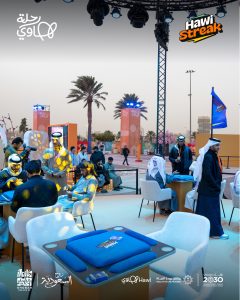
The Hawi Streak project was initiated to address this gap by developing a national framework that organizes, regulates, and enables fair and sustainable hobby competitions, while aligning with the Quality of Life Program’s objectives and broader national transformation goals.
Challenge
Although hobbies were widely practiced and diverse in nature, there was no unified national framework to regulate them or define clear mechanisms for competitive activation. This resulted in fragmented initiatives, limited visibility for hobbyists, inconsistent competition formats, and constrained participation.
The core challenge was to move beyond a broad concept of “promoting hobbies” toward a practical, execution-ready system capable of accommodating a wide range of activities. This system needed to determine which hobbies could be competitively activated, identify appropriate competition models, and ensure alignment with Saudi Vision 2030 and the Quality of Life Program, while upholding principles of fairness, inclusivity, and sustainability.
TAM’s Approach
TAM applied a structured, evidence-based methodology to design a scalable national framework for hobby competitions, ensuring strategic alignment, local relevance, and long-term sustainability.
The approach focused on:
- Global benchmarking of leading competition ecosystems across sports, cultural, and creative sectors to identify best practices and success factors.
- Development of a comprehensive hobby landscape and assessment of its relevance within the Saudi context.
- A multi-stage prioritization process based on strategic alignment with Quality of Life objectives, competitiveness potential, and feasibility of fair, measurable evaluation.
- Structuring the prioritized hobbies into clear categories and activation pathways to enable national-level implementation.
What We Delivered
The project established a unified national foundation for activating hobbies competitively, supported by practical and scalable outputs:
- A localized assessment covering 192 hobbies, with 111 qualified for competitive activation.
- Formation of six strategic hobby clusters based on participation characteristics and evaluation logic.
- Design of seven competition models tailored to different engagement and progression levels.
- A comprehensive implementation roadmap outlining launch strategy, scaling approach, governance model, digital enablement, and stakeholder engagement.
Impact at a Glance
10+
global hobby competition models benchmarked
192
hobbies analyzed in depth
111
hobbies qualified for competitive activation
6
core hobby clusters established
7
distinct competition models designed
1
unified national framework supported by an implementation roadmap
Lasting Value Created
The Hawi framework transformed the promotion of hobbies from a broad concept into an evidence-based, execution-ready system. By moving from an unstructured landscape of potential hobbies to a clearly defined and categorized set, the project reduced fragmentation risks and enabled more informed decision-making for policymakers and implementing entities.
Embedding the Quality of Life Program’s objectives throughout the design process ensured alignment with Saudi Vision 2030, particularly in increasing community participation, enhancing well-being, and supporting creativity. The seven competition models now serve as reusable tools for both government and private sector stakeholders, providing a shared foundation for designing fair, scalable, and sustainable hobby competitions.
Over the long term, the framework establishes an institutional base for the hobby ecosystem in the Kingdom, enabling a shift from individual, scattered practices to organized and recognized platforms that contribute to quality of life, social identity, and cultural value.